


 มูลนิธินวธรรม ชั้น 25-27 อาคารสาธรนคร







Precision Tooling for High-Volume Vehicle Production
Precision Automotive Injection Molds for Reliable High Volume Production
Over 80% of plastic components inside a modern vehicle are formed by injection molding, making this manufacturing discipline essential to automotive production. An automotive injection mold manufacturer designs and fabricates precision steel or aluminum molds that are mounted onto injection molding machines to shape molten polymers into parts like dashboards, bumpers, or interior trim. The process involves injecting heated plastic under high pressure into a closed mold cavity, where it cools and solidifies to form a net-shape component with tight tolerances and repeatable quality. This method allows manufacturers to produce complex, lightweight parts cost-effectively in high volumes, directly supporting vehicle assembly without additional machining steps.
Precision Tooling for High-Volume Vehicle Production
For high-volume vehicle production, an automotive injection mold manufacturer must engineer precision tooling that cycles under extreme pressures with sub-micron tolerances, ensuring every bumper, dashboard, or trim piece replicates identically across millions of parts. This demands hardened steel cavities and advanced cooling channel designs that maintain dimensional stability through rapid thermal cycling. Precision tooling eliminates scrap by holding wall thicknesses to 0.01mm, directly reducing material waste and post-mold machining costs. Only molds with PVD-coated cores and modular insert systems can sustain 24/7 production without unscheduled downtime. The difference between a supplier delivering on schedule versus causing line stoppages is the ability to pre-compensate for shrinkage and warp in the tool steel itself.
Core Capabilities of a Specialized Molding Partner

A specialized molding partner brings high-cavitation tool design to the table, ensuring each cycle churns out dozens of identical, precision parts without hiccups. They’ve mastered hot runner systems to eliminate waste and maintain consistent fill across every cavity, crucial for door panels or dashboards. You’d rely on their real-time process monitoring to catch warpage or flash before thousands of parts run. Their in-house mold flow analysis validates gating and cooling channels upfront, slashing trial-and-error.
- Advanced multi-cavity tooling for maximum uptime
- Turnkey capabilities from mold design to production launch
- Automated quality checks with CMM and vision systems
- Material-specific expertise for filled polymers and high-heat resins
Key Quality Certifications and Industry Standards
For automotive injection mold manufacturers, ISO 9001 and IATF 16949 certifications are non-negotiable for high-volume vehicle production. IATF 16949 specifically addresses automotive quality requirements, ensuring consistent mold output and defect reduction. A clear sequence of steps to maintain these standards includes:
- Implementing Statistical Process Control (SPC) for real-time dimensional monitoring.
- Conducting Measurement System Analysis (MSA) on critical tooling gauges.
- Performing regular mold audits using AIAG core tools like PPAP and FMEA.

These certifications directly reduce scrap rates and guarantee repeatability across millions of cycles, keeping your production line running smoothly.
Materials Expertise for Demanding Vehicle Components
In the high-stakes world of automotive injection molding, our materials expertise is forged from years of refining polymer compounds for parts that must endure engine-bay heat and chassis stress. We once faced a transmission component that kept warping under load. Our team swapped the standard nylon for a carbon-fiber-reinforced blend, which solved the warping and extended part life. Q: What is your toughest requirement for a demanding vehicle component? A: Our ability to match the exact creep resistance and thermal stability your design demands—like selecting a PPA over a PBT for high-temp oil pans.
Engineering-Grade Resins for Interior and Exterior Parts
For demanding interior parts like dashboards and door panels, we select engineering-grade resins that balance low-VOC emissions with impact resistance, ensuring longevity under UV exposure and temperature swings. Exterior components, such as bumper fascias and mirror housings, demand UV-stabilized, weatherable grades that withstand stone chips and thermal cycling without cracking. Our expertise lies in tailoring glass-filled or mineral-reinforced engineering-grade resin formulations to meet specific load-bearing needs and surface finish requirements, directly from our tooling capabilities. This precision eliminates warpage and sink marks in complex geometries.
Engineering-grade resins for interior and exterior parts deliver UV resistance, impact toughness, and dimensional stability, optimized through tailored formulations for automotive applications.
Lightweight Composite Solutions for Structural Applications
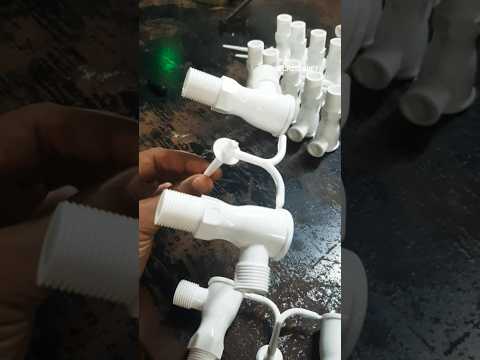
For demanding vehicle components, our lightweight composite solutions for structural applications replace metal with high-strength fiber-reinforced thermoplastics, lowering component weight by up to 50% without sacrificing impact resistance. Tooling is engineered for precise fiber alignment, ensuring consistent mechanical properties in complex geometries like chassis brackets and battery housings. Our molds incorporate controlled cooling zones to manage resin flow in thick sections, preventing voids. This approach directly reduces fuel consumption and extends electric vehicle range by optimizing load-bearing parts while maintaining production cycle times comparable to conventional injection molding.
Advanced Mold Design and Simulation Techniques
For an automotive injection mold manufacturer, advanced mold design begins with high-fidelity 3D CAD, creating complex conformal cooling channels that drastically reduce cycle times for demanding engine bay components. Simulation techniques like Moldflow are then applied to predict warpage and fill patterns for tight-tolerance parts, such as intake manifolds. Structural FEA specifically validates the mold’s steel for high-pressure clamping forces, preventing tool failure during long production runs. A crucial detail is real-time thermal simulation, which adjusts core and cavity temperatures to eliminate sink marks in thick-wall structural parts, ensuring first-shot success without costly steel modifications.
Mold Flow Analysis for Defect-Free Manufacturing
For an automotive injection mold manufacturer, Mold Flow Analysis for Defect-Free Manufacturing simulates the plastic melt’s behavior before steel is cut, ensuring first-shot success. This analysis predicts common defects like weld lines, air traps, and sink marks by modeling fill pressure, temperature gradients, and cooling rates. The process follows a clear sequence:
- Mesh the 3D part geometry and select a material-specific viscosity model.
- Set gate locations and runner system parameters to balance flow.
- Run the simulation to identify void formation or shear stress hotspots.
- Iterate gate positions or wall thickness until defect predictions vanish.
This eliminates costly physical trial-and-error, delivering zero-defect parts from the first production cycle.
Designing for Manufacturability and Cycle Time Reduction
In advanced mold design, conformal cooling channel geometry is critical for reducing cycle time. By routing these channels to precisely match the part’s contour, heat extraction becomes uniform, allowing for dramatically shorter cooling phases. This directly supports manufacturability by minimizing warpage and residual stress. Simultaneously, the designer selects draft angles and wall thicknesses that promote uniform filling and ejection. Gate placement is optimized specifically to reduce fill time without creating flow marks. Every geometric decision, from runner sizing to venting depth, is made to accelerate the injection and cooling stages while ensuring first-shot quality, thereby lowering per-part cost and throughput.
Custom Tooling for Complex Automotive Geometries
A wireframe model flickers on the screen; this is where the mold engineer’s real work begins. For complex automotive geometries—think deeply finned LED housings or sweeping interior trim panels with undercuts—standard mold bases fail. The automotive injection mold manufacturer must craft custom tooling with conformal cooling channels that trace every contour, preventing warpage in that thin-wall A-pillar cover. It is in the subtle slide action for a negative draft clip that the toolmaker’s craft truly speaks, a quiet solution the end-user never sees. The steel is EDM’d precisely to ensure that multi-gate flow reaches every lattice section of that structural engine bracket without knit lines. Every core, cavity, and lifter is bespoke, engineered from scan data of the part itself to hold micron tolerances under high cavitation cycles.

Multi-Cavity and Family Mold Configurations
For high-volume automotive production, multi-cavity and family mold configurations drastically boost efficiency by molding multiple identical or related parts in a single cycle. A multi-cavity setup mirrors the same geometry—like four dashboard clips—to maximize output per shot. Conversely, family molds combine different components, such as a door handle and its bezel, into one tool, ensuring part-to-part consistency and reduced assembly costs. Balancing cavity layout is critical to maintain uniform fill and cooling across complex geometries.
- Precise gate and runner balancing ensures consistent weld lines and dimensional stability across all cavities.
- Family molds require careful steel selection to prevent filling one cavity while starving another.
- Hot runner systems in multi-cavity tools reduce scrap and cycle time for intricate automotive parts.
- Cavity spacing must accommodate cooling channels FOX MOLD plastic injection mold manufacturer to avoid warpage in thin-wall geometries.
Insert Molding and Overmolding for Integrated Assemblies
For integrated automotive assemblies, an automotive injection mold manufacturer leverages insert molding and overmolding to fuse multiple components into a single, robust part. This eliminates secondary assembly steps and reduces part count. The process follows a clear sequence:
- A preformed component, like a threaded insert or sensor, is precisely loaded into the mold cavity.
- Molten plastic is injected around this insert, creating a permanent mechanical bond.
- The cooled part is ejected as a fully integrated assembly, such as a sealed connector housing or a vibration-dampened bracket.
This technique directly strengthens structural geometries while simplifying the final product’s logistics and durability.
Quality Control Protocols Across the Production Cycle
At an automotive injection mold manufacturer, quality control protocols begin with incoming material certification, verifying steel hardness and thermal conductivity. During machining, in-process CMM inspections check critical dimensions like core and cavity fits against nominal data. After assembly, trial shots undergo first article inspection, comparing cycle times and part weight to the FMEA. How often should we run capability studies? Every 10,000 cycles or after any tool wear adjustment, to maintain CPk above 1.67 for tight-tolerance features. Final protocols include a dye-penetrant test on slide action surfaces and a chill-blast pass to confirm cooling efficiency before shipment.
In-Process Dimensional Inspection with CMM Machines
During mold manufacturing, in-process CMM inspection verifies critical features like core pins and cavity inserts immediately after roughing or semi-finishing. This catches dimensional drift before final machining, preventing scrap of expensive tool steel. For example, measuring free-form surfaces with a CMM at mid-manufacturing ensures cooling channel placement remains within 0.01 mm tolerance. Why is in-process CMM inspection preferred over final-only checks? It allows real-time feedback to adjust CNC offsets on the shop floor, reducing rework cycles by up to 40%. This protocol guarantees that each mold segment meets print specifications before assembly, directly impacting part flash and cycle time in production.
End-of-Line Testing for Surface Finish and Fit
End-of-line testing for surface finish and fit in an automotive injection mold manufacturer involves a precise, multi-stage verification to ensure components meet strict dimensional and aesthetic tolerances. First, the mold’s cavity surfaces are examined under controlled lighting to detect micro-porosity, flow marks, or polish defects that could affect part gloss. Next, a coordinate measuring machine (CMM) validates that all shut-off faces and slide interfaces maintain sub-micron gaps, preventing flash or mismatch. Finally, test shots are ejected and assessed for tactile smoothness using a profilometer. This sequence ensures surface finish and fit integrity before the mold ships, directly correlating to reduced scrap in production.
- Visual inspection under specialized lighting for surface imperfections.
- CMM verification of critical mating surfaces and tolerances.
- Profilometer measurement of test-shot roughness and edge consistency.
Supply Chain Integration and Just-in-Time Delivery
Supply chain integration for an automotive injection mold manufacturer ensures your mold base, steel, and hot runner components arrive precisely when production runs begin, eliminating costly inventory. By linking your ERP system with our scheduling platform, we trigger real-time orders for hardened inserts and ejector pins, synchronizing with your vehicle model launches. This enables just-in-time delivery of finished molds, where we ship directly to your press line hours before a shift starts, not weeks early. You avoid holding millions in raw stock or finished tools.
The critical insight: raw material procurement and mold assembly must share a single, digital production cadence—any lag corrupts the entire JIT cycle and risks automotive assembly line stoppages.
Each step from steel quenching to micron-level machining is tiered to your build sequence, not a calendar date.
Raw Material Sourcing and Inventory Management
For an automotive injection mold manufacturer, raw material sourcing involves selecting high-grade tool steels (e.g., H13, S7) and aluminum alloys from certified mills, directly tied to mold life and part cycle times. Inventory management requires tracking specific heat codes and certifications to maintain traceability for quality audits. Just-in-time steel procurement minimizes capital tied up in stock while ensuring availability for urgent die repairs. Strategic buffer stock on critical grades prevents production halts without overburdening warehouse capacity.
- Pre-qualify suppliers based on material composition consistency and delivery lead times
- Maintain a tiered inventory system: fast-moving steels on-site, specialty alloys via vendor-managed stock
- Use ERP-linked bin locations to track lot numbers and remaining shelf life for each mold build
Logistics for Seamless Assembly Line Support
For an automotive injection mold manufacturer, real-time inventory tracking is key to seamless assembly line support. We keep your production flowing by syncing mold deliveries directly with your line’s pace, so parts arrive exactly when needed. This means no stockpiling that clutters your floor, and no downtime while waiting for components. We coordinate shipments to match your shift schedules, ensuring each mold set hits your station ready for immediate use.
- Aligning delivery windows with your line’s cycle times.
- Using color-coded labels for quick part identification at the station.
- Offering flexible, on-demand resupply for last-minute schedule changes.
Sustainability Practices in Modern Mold Manufacturing
For an automotive injection mold manufacturer, sustainability means choosing durable tool steels that extend mold life and reduce replacement frequency. You’ll often see conformal cooling channels, cut with 3D printing, to slash cycle times and energy use per part.
One key insight: optimizing gate and runner design minimizes plastic waste, directly trimming material costs.
Also, implementing predictive maintenance via embedded sensors prevents costly downtime and extends mold longevity. Many shops now recycle spent coolant and metal chips from machining, closing the loop on production waste. This isn’t about greenwashing; it’s practical, day-to-day tuning for efficiency that saves clients money over the mold’s lifetime.
Reducing Waste Through Closed-Loop Cooling Systems
Automotive mold manufacturers implement closed-loop cooling systems to directly slash water usage and thermal energy waste. These systems recirculate coolant, eliminating the constant discharge of heated water into drains. By precisely regulating mold temperature, they reduce cycle times, meaning less energy is consumed per part produced. This containment prevents chemical treatment runoff, lowering environmental liability. The immediate result is a measurable drop in operational costs tied to water procurement and heating. For every production run, closed-loop cooling transforms a linear consumption model into a sustainable cycle, directly shrinking the ecological footprint of each molded component.
Recycled Material Handling and Biodegradable Options
For automotive injection mold manufacturers, recycled material handling requires precise control over material flow and contamination. Regrind from post-industrial scrap is often blended with virgin resin at ratios up to 30%, demanding consistent pellet size to avoid injection defects. Biodegradable options, like PLA or PHA compounds, are tested for interior trim applications where UV stability and impact resistance are critical. These biopolymers require precise moisture management during processing to prevent degradation in the barrel. The table below contrasts key handling differences:
| Aspect | Recycled Material Handling | Biodegradable Options |
|---|---|---|
| Feedstock source | Post-industrial regrind | Renewable plant-based resins |
| Processing hurdle | Contamination filtering | Moisture control & thermal stability |
| Mold design tip | Wider gates for melt flow | Lower injection speeds to avoid shear |
Innovations in High-Cavitation and Hot Runner Systems
Automotive injection mold manufacturer advancements in high-cavitation systems now utilize modular stack designs to produce complex underhood components with cycle time reductions exceeding 20%. Innovative hot runner systems integrate direct gating with thermal gate control, enabling warpage-free molding of thin-wall structural parts. Valve-gate sequencing has been refined to eliminate weld lines in safety-critical interior trims, while wear-resistant nozzle tips withstand abrasive glass-filled nylons. Dedicated temperature zones per cavity ensure uniform viscosity across 64+ cavity tools for connector housings. These integrated hot runner/high-cavitation systems directly reduce tooling costs per part by minimizing material waste and post-mold trimming, delivering zero-flash production for transmission components.
Balancing Speed and Precision in High-Output Molds
Balancing speed and precision in high-output molds means tweaking cycle times without sacrificing part quality. For an automotive injection mold manufacturer, this often involves optimized cooling channel layouts to pull heat faster while preventing warpage. Slight adjustments to injection pressure during the packing phase can shave seconds off each cycle. The real trick is tuning valve gate sequencing in hot runner systems to fill cavities evenly at high velocities. Q: How do you prevent short shots when speeding up? A: It’s about matching melt temperature and flow rate to the cavity geometry—too fast, and you get voids; too slow, and you miss dimensional tolerances.
Temperature Control Technologies for Consistent Flow
For automotive injection mold manufacturers, precise temperature control technologies ensure consistent polymer flow across high-cavitation hot runner systems. Closed-loop controllers with zone-specific heating maintain uniform melt viscosity, preventing cold slugs or degradation that compromises part quality. Advanced sequencing algorithms dynamically adjust thermal profiles during injection cycles, compensating for shear heat variations in complex multi-drop manifolds. This temperature zone isolation strategy eliminates flow imbalances that cause dimensional defects in demanding automotive components like trim panels and underhood housings.
Temperature control technologies enable consistent flow by maintaining uniform melt viscosity through zone-specific heating and dynamic thermal profiling, ensuring repeatable cavity fill in high-cavitation automotive molds.
Partnering with Tier One and OEM Automotive Suppliers
Partnering with Tier One and OEM automotive suppliers requires an automotive injection mold manufacturer to demonstrate rigorous adherence to IATF 16949 quality standards and PPAP documentation protocols. You must invest in advanced simulation software and high-temperature materials like PEEK to produce molds capable of repeatable micron-level tolerances demanded by these partners. Successful collaboration hinges on early supplier involvement during the vehicle design phase, allowing mold makers to refine gating, cooling, and ejection systems before hard tooling begins. Direct communication with the OEM’s engineering team is essential for aligning tool steel selection and surface finishes with specific lifecycle requirements. Negotiating contractual liabilities for mold lifespan and maintenance intervals often determines whether a partnership progresses beyond pilot production. Consistent delivery of zero-defect prototype molds—tested via CMM and mold flow analysis—builds the trust needed for long-term supply agreements.
Collaborative Engineering for Prototype to Production
Collaborative engineering for prototype to production begins when OEM and Tier One engineers share CAD data directly with the mold manufacturer’s design team, enabling simultaneous refinement of part geometry and mold flow. This upstream partnership eliminates costly late-stage revisions by aligning gate locations, cooling channels, and ejection mechanisms with production-scale tooling from the initial prototype iteration. The mold manufacturer then produces bridge tooling that validates cycle time and material shrinkage, ensuring the final production mold requires minimal qualification runs.
- Joint DFM reviews identify draft angles and wall thickness issues before steel is cut.
- Mold flow analysis is shared bidirectionally to optimize fill patterns for both prototype and production cavities.
- Prototype inserts are designed to fit the same base frame as the production mold, reducing changeover time.
Non-Disclosure and Intellectual Property Safeguards
When partnering with Tier One and OEM automotive suppliers, an automotive injection mold manufacturer implements robust intellectual property protection protocols from the outset. Non-disclosure agreements (NDAs) are signed before any technical data is shared, strictly governing the handling of proprietary mold designs, part geometries, and process parameters. Physical and digital access to tooling files is restricted via secure servers and access logs, ensuring only authorized personnel handle sensitive CAD data. Safeguards also include contractual clauses that explicitly forbid reverse-engineering or copying of the mold tooling for secondary markets.
- Multi-tier NDAs that bind the manufacturer, its subcontractors, and any third-party vendors involved in the mold build.
- Encryption of all digital mold data during transmission and storage, with time-limited access rights for OEM partners.
- Dedicated, segregated production cells or locked storage areas for proprietary tooling and prototype parts.
Cost Optimization Strategies for High-Volume Runs

For a high-volume automotive injection mold run, designing multi-cavity molds with hot runner systems dramatically slashes per-part cost by increasing cycle efficiency and reducing material waste. Strategic material selection, such as using unfilled or recycled grades where structural limits allow, directly lowers raw material expenditure across millions of cycles. By implementing predictive maintenance on critical mold components, you can avoid unplanned downtime that erodes the cost-per-part advantages of continuous production. Precision cooling channel optimization further accelerates cycle times, maximizing machine utilization and driving down total operational expense.
Total Cost of Ownership vs. Upfront Tooling Investment
Choosing a mold based solely on a low upfront cost is a classic trap in high-volume auto runs. You need to focus on the lifecycle cost of the tool, which factors in repair frequency, cycle time efficiency, and part quality consistency. An initial $100,000 mold that wears down after 200,000 cycles can cost more than a $150,000 mold built for 1,000,000+ cycles.
- Calculate total cost per part, not just the tool price.
- Factor in downtime costs for mold repairs during production.
- Account for potential scrap rates from a lower-grade tool.
The real saving comes from a durable, high-tolerance mold that keeps your line running, proving that tooling amortization over millions of parts is the smarter metric.
Mold Maintenance Programs to Extend Lifespan
A disciplined mold maintenance program directly reduces per-part costs across high-volume automotive runs. Implementing a predictive maintenance schedule based on shot count, not calendar days, catches micro-cracks and wear before they cause non-conforming parts or catastrophic tool failure. For a high-volume bumper mold, this means scheduling proactive cleaning of venting channels and replacing worn valves after a set cycle threshold. This approach maximizes uptime and avoids expensive, unscheduled repairs that halt production. The strategic savings from extending tool lifespan through structured care transform maintenance from an expense into a direct lever for long-run cost optimization.